Your phone buzzes. You don’t recognize the number, but you answer anyway. On the other end, a caller claims to be from your bank’s fraud department.
They mention a suspicious $400 charge. They need you to verify your account number right now. Your gut says something’s off, but your brain is already scrambling.
Knowing what to do if you get a scam call is one of those things you don’t think about until it happens. And when it does, panic takes over. The good news?
A simple, repeatable plan can protect your money and your identity in under five minutes. In our research, the Federal Trade Commission reported receiving over 2.2 million fraud complaints in 2023 alone, with phone calls being a primary vector. Let’s build your defense plan.
Quick Answer
Hang up immediately. Do not press buttons. Do not answer questions.
Block the number. Report it to the FTC at ReportFraud.ftc.gov. If you gave money or personal information, contact your bank right away, place a fraud alert, and consider freezing your credit.
Speed is your best defense.
Why Scam Calls Work: The Psychology Behind the Panic
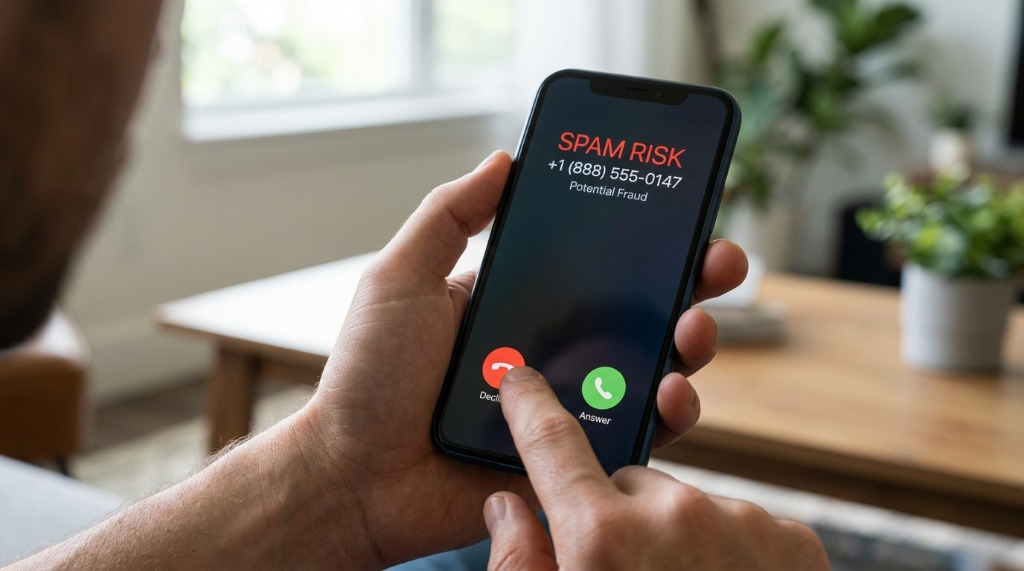
Scammers are not magicians. They are students of human behavior. They know exactly which emotional buttons to push to get you moving fast and thinking slow.
How scammers create urgency and fear
Every scam call follows the same emotional formula. First, they create a problem that feels real and immediate. Your Social Security number is suspended.
Your bank account is compromised. A warrant is out for your arrest. The details vary, but the goal is constant: make you feel like you have seconds to act.
Second, they isolate you. They tell you not to hang up. They tell you not to call anyone else.
They might say the situation is confidential, or that a family member is in danger. This keeps you from calling your actual bank or a trusted friend who would spot the red flags immediately.
Third, they demand a specific action. Send money via gift cards. Wire funds to a “secure” account.
Read back a verification code. These actions are designed to be irreversible and untraceable, which is why scammers favor them.
Why smart people still fall for them
Here’s the uncomfortable truth: education level and intelligence have almost nothing to do with scam susceptibility. When you are startled, your brain’s logical reasoning centers literally shut down. The amygdala, which processes fear, takes over.
You are not thinking clearly because your brain is in survival mode.
In our research, aggregate data from the FTC and the FBI’s Internet Crime Complaint Center consistently shows that scam victims span every demographic. The most targeted groups are older adults, immigrants, and people under financial stress, but no one is immune. The scariest part?
Many victims report knowing about scams in general. They just never thought they would fall for one themselves.
The protective takeaway here is simple. You cannot outsmart a scammer in the moment. Your only winning move is to refuse to engage entirely.
Hang up. That single action breaks the whole spell.
The Second You Realize It’s a Scam: Do This Immediately
When the penny drops, your first instinct might be to argue, interrogate, or prove the scammer wrong. Resist that urge with everything you have.
The only safe response: hang up
Just hang up. No warnings, no clever comebacks, no “I know you’re a scammer” speeches. Scammers are professionals.
They script for every objection you can imagine. They are not going to apologize and go away. Every second you stay on the line, they are trying to find an angle.
If you hang up quickly, you win. The call is over. Nothing bad happens just because you answered.
The danger only grows when you stay on the line and start giving them information.
Why pressing buttons or “opting out” makes it worse
Many automated scam calls end with a prompt. “Press 1 to speak to an agent.” “Press 2 to be removed from our list.” “Press 3 to stop receiving calls.” It feels like taking control. In reality, it is the exact opposite.
When you press any button, the system flags your number as active and reachable. Your number gets moved to a “live lead” list, which is then sold to other scammers. Your call volume will increase, not decrease.
This is a well-documented practice in the call center fraud world.
The only safe response to an automated prompt is silence followed by hanging up.
What to do if you already said “yes” or gave info
If you already told a scammer “yes” or gave them basic information, take a breath. A single “yes” recording is rarely enough to authorize charges on its own. Scammers need more than that, usually your full card number, CVV, or a two-factor authentication code.
If you gave a two-factor code, contact your bank or the relevant service immediately. That code is the key to your account. If you gave your Social Security number, skip ahead to the section on personal information below.
Doing nothing is the only truly dangerous move.
What to Do After You Hang Up (Step-by-Step)
Once you are off the call, you have won the immediate battle. Now you need to take a few practical steps to protect yourself going forward.
Block the number
This is quick and straightforward. On an iPhone, open your recent calls, tap the blue info icon next to the number, then select “Block this Caller.” On Android, long-press the number in your call log, then tap “Block/report spam.” This stops that specific number from reaching you again.
Keep in mind that scammers use caller ID spoofing. They can make any number appear on your screen, including a legitimate local business or even your own number. Blocking one number doesn’t stop all future calls, but it does remove that particular source.
Report the call to the right agency
Reporting feels like a drop in the ocean. It is not. The FTC and its international counterparts use these reports to identify patterns, trace payment methods, and build cases against criminal networks.
- In the US: Report to the FTC at ReportFraud.ftc.gov
- In the UK: Report to Action Fraud at actionfraud.police.uk
- In Canada: Report to the Canadian Anti-Fraud Centre
- In Australia: Report to Scamwatch at scamwatch.gov.au
These reports are the raw data that agencies use to shut down operations. Your two minutes of effort genuinely helps.
Document everything
Before you forget, jot down the key details. What number called you? What did the caller claim?
What time did it happen? If you have a smartphone, take a screenshot of the caller ID before you block it.
This documentation matters if you later discover fraudulent activity on your accounts. Banks and authorities will ask for specifics. Having a written record makes the process faster and more credible.
If you recognize the warning signs of a scam during a future call, try these common tactics used by phone scammers to know what to listen for.
You Gave Them Money — Now What?
This is the urgent scenario. Every minute counts when money has already moved. Your response depends on how you paid.
Credit card or debit card charges
Call your bank or card issuer immediately. Explain that you were scammed and authorize a chargeback. Most card issuers have fraud protection policies that cover unauthorized transactions.
They will likely cancel your card and issue a new one with a different number.
Timeframe matters. The sooner you call, the easier the dispute process is. Delaying by days or weeks gives the transaction time to clear and makes recovery harder.
Wire transfers and bank payments
Wire transfers are dangerously close to irreversible. Once the money leaves your account, it can be very hard to get back. Call your bank immediately and ask about a wire recall.
Banks can sometimes request a recall if the funds have not yet been picked up.
This window is narrow, measured in hours, not days. If the money has already been collected, you are likely out of luck. Report the incident to the FTC and local police anyway.
It creates a paper trail that may help in larger investigations.
Gift cards
Gift cards are the favorite payment method for scammers because they are anonymous and untraceable. If you gave a scammer gift card codes, call the issuing company right away. Some companies can freeze the funds if you act within the first few hours.
The major gift card issuers, including Google Play, Apple, Amazon, and major retailers, have fraud reporting lines. Call them, explain what happened, and provide the card codes. Success is not guaranteed, but acting fast gives you a real chance.
Cryptocurrency
If you sent cryptocurrency to a scammer, recovery is very unlikely. Crypto transactions are designed to be irreversible and pseudonymous. You will not get that money back.
What you should do is report the wallet address to the FTC and the FBI’s IC3. Law enforcement can sometimes track these addresses and, in rare cases, seize funds if they catch the operation. It is a long shot, but it costs you nothing.
If you spot common scam patterns before handing over money, these five warning signs of a phone scam call can help you catch it earlier next time.
You Gave Them Personal Information — Now What?
If you shared your Social Security number, passport details, or banking information, you are dealing with potential identity theft, not just a single fraudulent charge. This requires a broader response.
Place a fraud alert
A fraud alert tells lenders to verify your identity before opening new accounts in your name. Contact any one of the three major credit bureaus: Experian, Equifax, or TransUnion. They are required by law to share your alert with the other two.
The initial alert lasts one year. It is free. You can renew it if you remain concerned.
This is the minimum step you should take when sensitive data has been exposed.

Freeze your credit (and why it’s the stronger move)
A credit freeze is more powerful than a fraud alert. It locks your credit files entirely. No one, including you, can open new credit without temporarily lifting the freeze.
It is free in the United States, and it does not affect your credit score. You can still use existing credit cards and loans. The freeze only blocks new account openings.
Given how frequently data breaches occur, freezing your credit permanently is a smart default for most people.
Monitor your accounts and change passwords
Change the passwords on any accounts you mentioned during the call. Enable two-factor authentication everywhere it is available. Review your bank statements and credit card charges for the next few months.
Consider using a password manager to generate and store complex passwords. Reusing passwords across sites is how scammers turn one leaked credential into a dozen compromised accounts. If you suspect deeper identity theft, file a detailed report at IdentityTheft.gov.
The FTC provides a personalized recovery plan there.
Common Scam Call Scenarios (and How to Spot Them Fast)
Scammers recycle a handful of proven scripts. If you recognize the pattern, you can shut the call down faster.
Government impersonation (IRS, Social Security)
A “government agent” claims you owe back taxes or that your Social Security number has been flagged for fraud. They demand immediate payment via wire transfer or gift cards.
Real government agencies never call to demand payment. The IRS initiates contact by mail. Social Security Administration representatives do not threaten arrest.
If you hear threats, it is a scam.
Fake bank fraud alerts
Your “bank” calls about suspicious activity. They ask you to confirm your account number, PIN, or a verification code. Sometimes they instruct you to move money to a “secure” internal account.
Legitimate banks never ask for your full PIN or password over the phone. They already have that information. If you are unsure, hang up and call the number on the back of your card.
Tech support scams
“Microsoft” or “Apple” detects a virus on your computer. They need remote access to fix it, for a fee. They guide you to install remote access tools like AnyDesk or TeamViewer.
No legitimate tech company makes unsolicited calls about infections. If you installed remote access software, disconnect your device from the internet immediately and run a security scan.
Grandparent and family emergency scams
A caller poses as a relative in crisis. They need bail money or an emergency wire transfer. They often say the “police” are holding them and to not tell anyone.
Verify independently. Call the relative on a known number. Contact other family members.
The emotional distress is designed to bypass your logic.
“You’ve won” and government grant scams
You won a sweepstakes you never entered. Or you qualify for a free grant. All you need to do is pay a “processing fee” first.
Real contests and grants never require upfront fees. If you have to pay money to receive money, it is a scam. Hang up.
Mistakes That Make Scam Calls Worse
A few common habits turn an annoying call into a serious problem. Here is what to avoid.
Answering unknown numbers out of curiosity
Every time you answer an unknown number, you confirm your line is active. Scammers share this information. If you are not expecting a call, let it go to voicemail.
The message will tell you who called. Legitimate callers leave a message. Scammers often do not, or they leave a vague, urgent prompt to call back.
Calling back suspicious numbers
If you missed a call and the voicemail mentions “important account activity,” do not call back that number. Look up the official customer service number on the company’s website or the back of your bank card.
Callback scams route you to a fake agent who walks you through handing over your personal information. It is the same scam with extra steps.
Trusting caller ID
Scammers spoof numbers easily. Your caller ID can say “IRS,” “Your Bank,” or a local area code. Spoofing technology is cheap and widely available.
Caller ID proves nothing.
If a caller ID looks legitimate, confirm independently by calling the official number. Never trust the display alone.
Delaying your response after exposing data
The worst move is doing nothing after realizing you made a mistake. Embarrassment is common. But waiting three days to report a fraudulent transaction can make recovery impossible.
Act within the first few hours. That is when banks can recall wires, freeze gift cards, and reverse charges. Speed is your only real advantage.
Frequently Asked Questions
Can a scammer access my phone just by calling?
No. Simply answering a call does not give anyone access to your device. Scammers need you to download an app, click a link, or enter a code before they can do any real damage.
The call itself is harmless until you interact.
What happens if I don’t report a scam call?
Nothing happens to you personally. But reporting matters for everyone else. Your report helps agencies spot patterns, trace payment methods, and build cases.
It takes two minutes and could prevent someone else from losing their savings.
Should I answer unknown numbers to ask them to stop?
No. Answering confirms your number is active, even if you yell at them. Your number gets added to live lead lists and sold to other scammers.
Silence is the only response that works.
Can someone steal my identity with just my name?
No. Your name alone is not enough. Scammers need more, like your Social Security number, date of birth, or account details.
That is why they ask so many questions. If you only gave your name, place a fraud alert anyway and monitor your accounts.
Is a credit freeze different from a fraud alert?
Yes. A fraud alert asks lenders to verify your identity before opening new accounts. A credit freeze blocks new credit entirely.
The freeze is stronger and free. Most experts recommend the freeze for anyone who has shared sensitive information.
Are call-blocking apps worth it?
Many are useful, but your phone and carrier already offer solid protection. Built-in features like silence unknown callers work well. If you do download an app, choose one from a reputable developer and check the permissions it requests.
Final Recommendation
You now have a clear playbook for scam calls. The core is simple: hang up fast, never engage, and act immediately if you made a mistake. Block the number, report it, and protect your accounts.
Keep this plan in mind. Share it with older family members who are frequent targets. A five-second hang up can save thousands of dollars and months of identity recovery headaches.
You do not need to be paranoid. You just need to be prepared.